

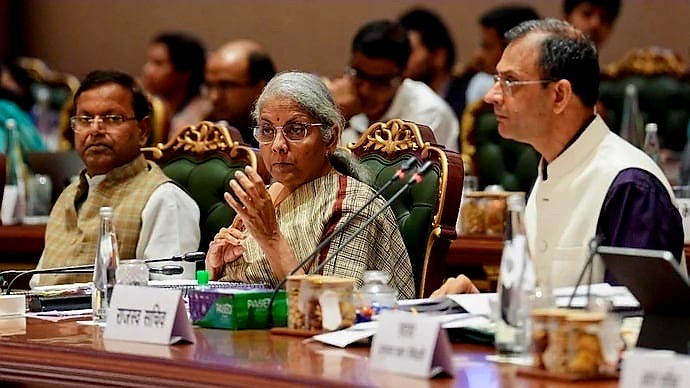

The Economic Survey 2023-24 is presented by Finance Minister Nirmala Sitharman. It emphasized that the Indian economy is robust and steady. Economic survey 2024 The survey was unveiled a day prior to the budget announcement on July 23. It forecasted a real GDP growth of 6.5-7% in FY25. According to the Economic Survey, the economy is expanding vigorously. It is showing strength despite obstacles. The Economic Survey 2023-24 shows that inflation is mostly stable, even though certain food prices are higher. The trade deficit for FY24 decreased from FY23, with the current account deficit at 0.7% of GDP and a surplus in the last quarter. There are enough foreign exchange reserves to keep the economy stable. Public investment has boosted capital formation, and the private sector. It started investing in FY22 after fixing balance sheet problems. It is now ready to continue this growth. The outlook for more private investment looks positive. The Economic Survey stated, “The Indian economy is in a strong position and stable condition. It is displaying resilience in the midst of geopolitical challenges. Policymakers, both fiscal and monetary, have ensured economic and financial stability as the Indian economy continues to strengthen post-Covid recovery.” The Economic Survey 2023-24 emphasized the importance of the agriculture sector in India and the need for a nationwide discussion. It pointed out that the country heavily subsidizes water, electricity, and fertilizers for farmers, with some being provided almost free of cost. Economic survey 2024: Big surprise for farmers Farmers’ incomes are not taxed. The government provides a minimum support price (MSP) for 23 specific commodities, along with monthly cash assistance through the PM-KISAN scheme. Despite significant investments by both national and state governments, a reevaluation of current and new policies could enhance support for farmers. The current conflicting policies are negatively impacting farmers. It leads to soil degradation, groundwater depletion, water pollution, and environmental challenges. These policies also affect public health by promoting diets high in sugar and carbohydrates instead of fiber and protein. Addressing these policy issues could bring about significant benefits, rebuilding trust in the government’s ability to lead the country towards a brighter future and providing substantial socio-economic gains.
Trending
- Ex-India opener takes potshots at Riyan Parag’s appointment as Rajasthan Royals captain: ‘He’s treated like king’.
- ‘Restrain the Israelis first’: Joe Kent, who quit as Trump’s aide, on US President’s climbdown on Iran war.
- Psychiatrist shares ‘4 supplements that can naturally boost dopamine’.
- Trump reacts to ‘terrible’ LaGuardia airport crash as Canadian PM breaks silence: ‘They made a mistake’.
- What’s happening on US-Iran ‘talks’ as Trump makes big claim but Tehran denies.
- ‘Israel is fighting for you all’: Netanyahu urges global action as he visits missile strike site in Arad.
- Denied poll ticket, former Puducherry minister quits BJP.
- Air India cancels 2,500 flights to West Asia; CEO says airline operating at 30% capacity.
