

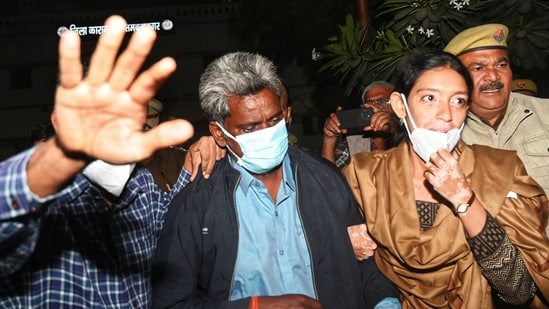

Surendra Koli’s lawyer said the verdict highlighted serious flaws in India’s criminal justice system due to which his client was ‘almost executed twice’. Surendra Koli, accused in the 2006 Nithari serial killings, walked out of Gautam Budhh Nagar’s Luksar Jail after the Supreme Court acquitted him in last of the 13 cases pertailing to the crime, allowing his curative petition challenging his conviction. Surendra Koli’s lawyer, Payoshi Roy, said the verdict highlighted serious flaws in India’s criminal justice system.
“This case exposes the deep fissures in our criminal justice. It reveals how easy it is to fabricate evidence and falsely implicate a poor man and numb judicial scrutiny by making sensational claims of cannibalism. Koli was almost executed twice,” said Koli’s lawyer.”Had he been executed we would have never learnt the truth of his innocence. This judgment should make us rethink the death penalty in India and how marginalized and impoverished people are treated within the criminal justice system,” Roy added.
What did the Supreme Court say?
A bench of Chief Justice BR Gavai and Justices Surya Kant and Vikram Nath passed the order, which read: “For the reasons recorded above, the curative petition is allowed.” The court quashed Koli’s conviction, sentence, and fine, and directed his immediate release, “if not required in any other case or proceeding.”
Koli had been convicted of raping and murdering a 15-year-old girl in Noida’s Nithari village, a conviction upheld by the Supreme Court in 2011. His review plea was dismissed in 2014, and his death sentence was later commuted to life imprisonment by the Allahabad High Court in 2015 due to delays in deciding his mercy petition.
In October 2023, the Allahabad high court acquitted Koli and co-accused Moninder Singh Pandher in several other Nithari cases, overturning their death sentences. The CBI and the victims’ families challenged those acquittals, but the Supreme Court dismissed all 14 appeals in July this year. On October 7, the top court reserved its verdict on Koli’s curative plea, observing that it “deserves to be allowed.” It noted that his conviction rested largely on a statement and the recovery of a kitchen knife, raising questions about the adequacy of evidence.
What is the Nithari case?
The Nithari killings came to light on December 29, 2006, when skeletal remains of eight children were found in a drain behind Pandher’s house in Nithari, Noida. These were serial killings that happened in Noida’s Sector-31 near Nithari village between 2005 and 2006. Koli was employed as a domestic help in the area. Further searches around Pandher’s residence led to the recovery of more skulls, bones, and body parts, which were of poor children and young women who had gone missing from the area.
