

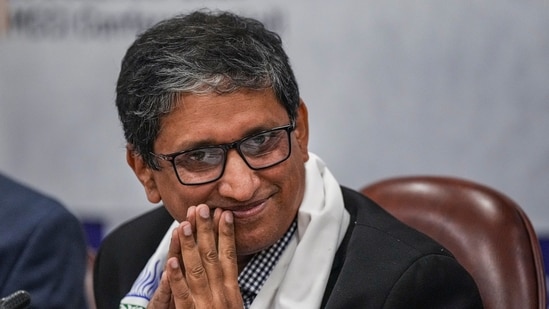

The envoy was summoned by B Shyam, joint secretary in charge of the Bangladesh–Myanmar division at the ministry of external affairs. India on Wednesday summoned Bangladesh High Commissioner Riaz Hamidullah and lodged a strong protest over the deteriorating security situation in Bangladesh, particularly concerns over plans by extremist elements that could threaten the safety of the Indian mission in Dhaka.Extremist forces have announced plans to stage protests around the Indian High Commission in Dhaka in the past few days.
Why was the summon issued?
Hamidullah was summoned by B Shyam, joint secretary in charge of the Bangladesh–Myanmar division at the ministry of external affairs, and was served a demarche, or formal diplomatic representation, people familiar with the matter said on condition of anonymity. People familiar with the matter said one of the triggers for summoning the Bangladeshi envoy was a controversial speech delivered on Monday by National Citizen Party (NCP) leader Hasnat Abdullah. In his remarks, Abdullah claimed that Bangladesh could shelter separatist forces from India and sever the country’s seven northeastern states.
Abdullah, one of the prominent student leaders who led protests against former prime minister Sheikh Hasina, was speaking at an event in Dhaka organised by Inqilab Mancha. In other news, police stopped a group of protesters marching towards the Indian High Commission in Dhaka’s Gulshan area on Wednesday afternoon, demanding the return of deposed prime minister Sheikh Hasina and others who fled during and after the July uprising last year.
“We expect the interim government to ensure the safety of missions and posts in Bangladesh in keeping with its diplomatic obligations,” the external affairs ministry said in a readout. It noted that Hamidullah was informed of India’s “strong concerns at the deteriorating security environment in Bangladesh” and the “activities of some extremist elements who have announced plans to create a security situation around the Indian mission in Dhaka”.
“India backs peace and stability in Bangladesh and has “consistently called for free, fair, inclusive and credible elections, conducted in a peaceful atmosphere”, the readout added. India-Bangladesh relations have sharply deteriorated since last year, with New Delhi repeatedly criticising the caretaker administration over its failure to address the oppression of minorities in Bangladesh, including Hindus.
India has also raised concerns over the interim government’s inability to curb the resurgence of radical and extremist forces in the country. NCP’s Sharif Osman Hadi is in critical condition after being shot by unidentified gunmen on December 12. Bangladeshi authorities and other NCP leaders, including Nahid Islam, have obliquely hinted at an Indian connection to the attack on Hadi without providing any evidence, an allegation that was repeated by Abdullah.
“Those creating chaos and terror in our country, those who tried to kill Hadi, those who are trying to disrupt the election, those who are trying to create instability in the country, those who kill our brothers and sisters on the border, they are being given refuge and support by India,” Abdullah said in his speech on Monday.
“I want to clearly tell India that those who don’t believe in the sovereignty and existence of my country, in voting rights and human rights, since you are giving refuge and support to these forces, we will give refuge and support to the separatist forces in India and sever the seven sisters from India,” he said. In an apparent reference to Abdullah’s remarks and similar statements by other Bangladeshi leaders, the external affairs ministry’s readout rejected the “false narrative sought to be created by extremist elements regarding certain recent events in Bangladesh”. It added that the “interim government has neither conducted a thorough investigation nor shared meaningful evidence with India regarding the incidents”.
