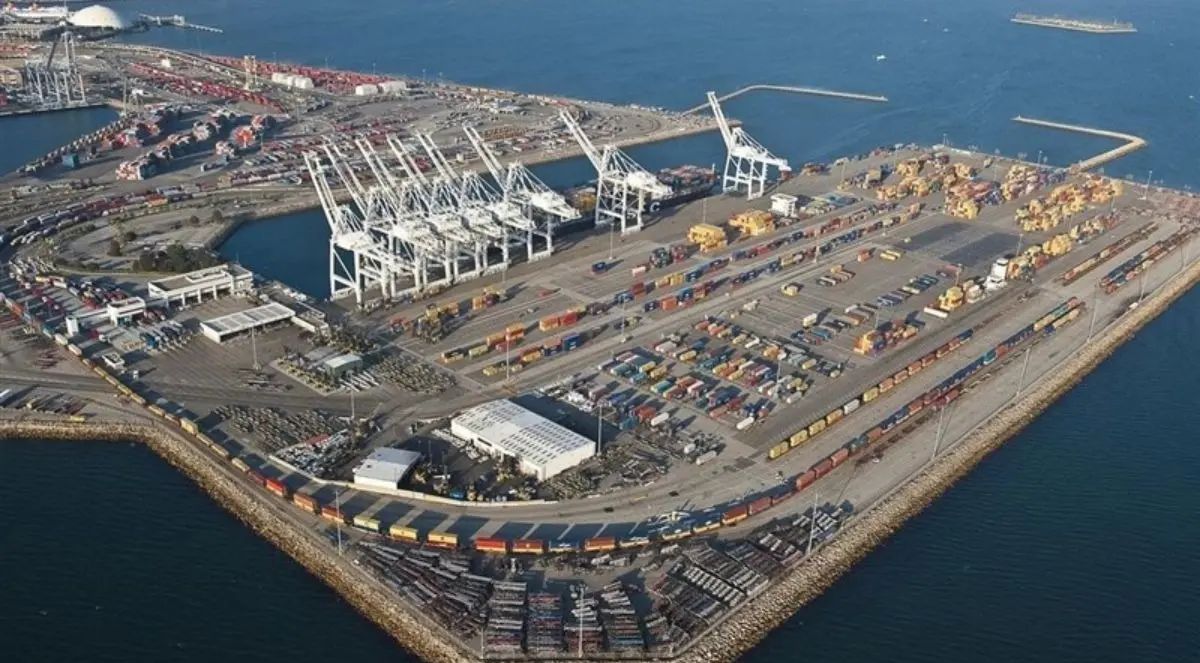

All Indian government officials serving on the board of state-owned entity IPGL, which took over operations at the Shahid Beheshti terminal in 2018, have resigned. India is exploring several options to retain its presence at the Chabahar port in the face of increasing US pressure on Iran, which has cast a shadow on the development of the strategic facility central to New Delhi’s connectivity ambitions, people familiar with the matter said on Friday.
A six-month exemption from US sanctions applicable to Chabahar port, granted by the Trump administration last year, is valid until April, and the government has taken several steps to reduce the exposure of state-run entities and officials to those sanctions, the people said on condition of anonymity. External affairs ministry spokesperson Randhir Jaiswal told a weekly media briefing on Friday that India remains engaged with the US on the issue of Chabahar port. “As you are aware, on October 28, 2025, the US Department of Treasury had issued a letter outlining the guidance on the conditional sanctions waiver valid till April 26, 2026,” he said in response to a question on India reportedly winding up its involvement in developing the port.
“We remain engaged with the US side in working out this arrangement,” Jaiswal said without giving details. The people cited above said the Indian side’s focus was on ensuring that government entities and officials were not exposed to any punitive US measures, including individual sanctions. The people acknowledged that the Indian side had delivered on its commitment to provide $120 million to develop the port under a 10-year agreement signed with Iran in May 2024 for long-term operations at Shahid Beheshti terminal.
Under the agreement, this amount was to be used for further equipping Shahid Beheshti terminal, including procuring equipment such as mobile harbour cranes, rail-mounted quay cranes, forklifts and pneumatic unloaders. All Indian government officials serving on the board of India Ports Global Limited, the state-owned entity that took over operations at the Shahid Beheshti terminal in 2018, have resigned from their positions. The people said this was part of the process of reducing the exposure of officials to US sanctions.
One of the options being considered is the creation of an entity to run operations at Shahid Beheshti terminal that would not be exposed to sanctions or would be able to withstand them, the people said. Chabahar port is crucial to India’s regional connectivity ambitions, especially for trade with Afghanistan, Central Asia, and Russia, and is also part of the International North-South Transport Corridor, a 7,200-km project to move goods to Europe. Retaining a presence at Chabahar port is also crucial for keeping on board the Iranian side, which has backed India at multilateral forums on critical issues such as Kashmir, the people said.
“We still have four months, and we remain engaged with the US to see what can be done,” one of the people said. US President Donald Trump has piled on the pressure on Iran in the wake of Tehran’s crackdown on nationwide protests, threatening to hit all countries trading with Iran with a 25% tariff. Indian authorities have contended that the move would have a “minimal impact” on the country, as India-Iran trade was worth only $1.68 billion during 2024-25 or about 0.15% of New Delhi’s total trade.
The people said there is still a lack of clarity on the 25% tariff threatened by Trump, as it was only mentioned in a social media post and was not accompanied by any formal notification or executive order. India already faces 50% US tariffs on its exports, including a 25% punitive levy over Russian oil purchases.
