

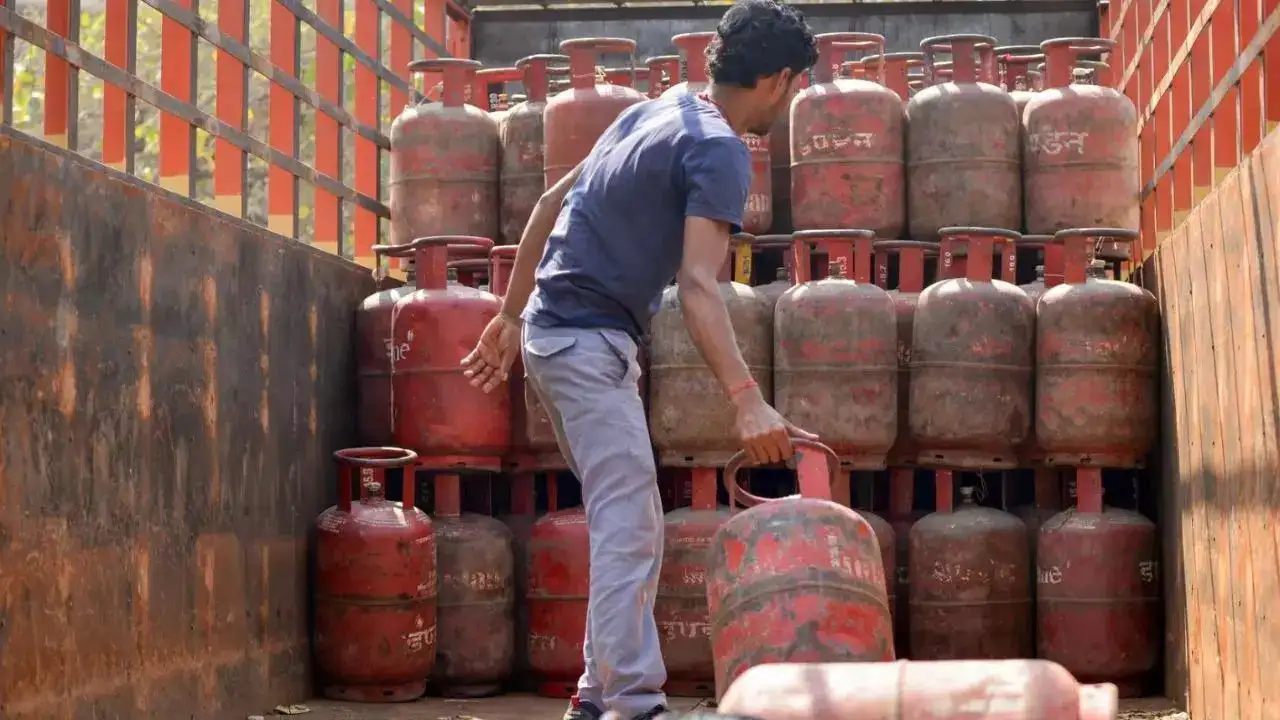

Cooking gas ‘shortage’: Panel of officials from Indian Oil, HPCL, BPCL to look into requests from non-essential commercial consumers, such as hotels. The central government has formed a grievance-redress committee and taken steps to ramp up supply of liquefied petroleum gas amid reports of shortage of commercial-use cylinders in several parts of India. This comes as the ongoing US-Iran conflict affects supply lines from West Asia.
The three-member panel comprises the executive directors of public-sector companies Indian Oil, Hindustan Petroleum and Bharat Petroleum Corporation Limited. Hindustan Petroleum (HPCL) posted on its X handle: “In light of current geopolitical disruptions affecting global fuel supply, steps have been taken to enhance LPG production and prioritise its availability for domestic consumers and essential non-domestic sectors such as hospitals and educational institutions.”
As for the non-domestic sectors that are not earmarked “essential”, such as hotels and restaurants, HPCL said their requests will be reviewed by this committee “based on merit, necessity, and product availability”. It also shared three email IDs where submissions can be made “for essential requirements from other sectors”: edlpg@bharatpetroleum.in, indanecareho@indianoil.in, and lpg.sbu.head@hpcl.in.
“Genuine requirement of restaurant associations’ for commercial LPG will be met and this committee will also re-prioritise the supply as per the requirements,” the sources said. Meanwhile, there were reports citing sources in India Today that domestic LPG production has “increased by 10% in the last few days”, though on-record confirmation was not yet available. “We were in crisis earlier but today we are not in any crisis of petroleum products,” a source said.
At the heart of the situation is the Strait of Hormuz, a sea pass that Iran is reported to have closed. But the government sources have said India is now sourcing 70% of its crude oil supply from non-Strait of Hormuz sources. The government, they said, has not taken any decision to curb export of refined oil. Oil minister Hardeep Singh Puri has in recent days said India has “enough buffer stock” of petro-products like LPG.
Meanwhile, the Union government has already invoked the Essential Commodities Act to ensure an uninterrupted supply of domestic cooking gas, directing refineries and petrochemical units to maximise production of liquefied petroleum gas (LPG) and divert key hydrocarbon streams to the LPG pool.
Supply of natural gas to certain sectors is priority, and shall be maintained — subject to operational availability — to 100% of their average past six-month consumption. These sectors include domestic piped natural gas supply, and CNG for transport, besides pipeline operational requirements.
Supply to fertiliser plants shall be 70% of their past six-month average gas consumption, again subject to operational availability. This is set at 80% for tea industries, manufacturing and other industrial consumers supplied through the National Gas Grid.
As for city gas distribution, the outlets have been asked to ensure industrial and commercial consumers in their networks receive 80% of their past six-month average.
Union oil ministry says
Meanwhile, the Ministry of Petroleum and Natural Gas issued orders to refineries to increase LPG production, and directed that such additional output be channelled specifically for domestic use, it said in a post on X.
