

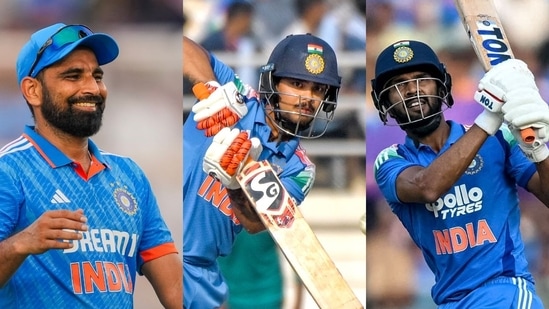

The ODI squad reflects a more settled strategy, aiming to build consistency and stability in the 50-over format. The Indian selectors opted for continuity in the ODI squad for the upcoming series, with Rishabh Pant retaining his place as the second wicketkeeper. Domestic performers, however, will have to wait for their opportunity, with players like Mohammed Shami and Ishan Kishan still on the fringes. This approach contrasts with the recent T20I selections, where Shubman Gill was surprisingly left out of both the New Zealand T20Is and the World Cup squad, while Ishan Kishan was a late addition. The ODI squad reflects a more settled strategy, aiming to build consistency and stability in the 50-over format.
The star wicketkeeper-batter has retained his spot, signalling that the selection committee and team management are aiming for continuity in the ODI setup. There had been speculation that Pant might lose his place to Ishan Kishan, who has impressed in domestic cricket and returned to the T20I squad. However, a couple of half-centuries in the Vijay Hazare Trophy helped Pant hold on to his position. Despite this, it remains unlikely he will feature in the playing XI, with KL Rahul firmly established as India’s first-choice wicketkeeper at the moment.
Despite featuring in a Vijay Hazare Trophy match, Hardik Pandya was not cleared by the BCCI’s COE to bowl a full 10-over quota, so the selectors chose to exclude him from the ODI series starting in Vadodara on January 11. With the T20 World Cup just around the corner, risking him made little sense. In his absence, Nitish Kumar Reddy has been drafted as the team’s fast-bowling all-rounder.
It appears the selectors and team management have already made their plans, leaving little room for Mohammed Shami to stage a comeback, as he misses out on the ODI squad once again. Shami was part of India’s Champions Trophy-winning team, but has struggled to regain a regular spot since. While he has demonstrated his match fitness and form in domestic cricket, the selectors seem focused on building and investing in younger fast bowlers at this stage, prioritising long-term planning over recalling experienced campaigners. Shami’s omission highlights the team’s intention to develop the next generation of pace options in the 50-over format.
Ruturaj Gaikwad has been left out despite scoring a century against South Africa in the second ODI, with his place making way for Shreyas Iyer’s return. Even though Iyer is still awaiting fitness clearance, the selectors chose not to name Gaikwad as cover. Yashasvi Jaiswal, meanwhile, retained his spot as the third-choice opener after his series-deciding hundred against the Proteas, leaving Gaikwad to wait yet again for another opportunity.
Mohammed Siraj returns: Mohammed Siraj has made his way back into India’s ODI setup after sitting out the South Africa series, where the pace unit often looked short of direction. Arshdeep Singh, Harshit Rana and Prasidh Krishna showed promise but also felt the heat on flatter surfaces offering little help to bowlers. With Jasprit Bumrah rested as part of his workload management ahead of the T20 World Cup, the attack lacked a clear spearhead. Siraj’s return addresses that gap, with the experienced quick expected to lead the bowling group, set the tone with the new ball and provide guidance to the younger fast bowlers as India look for greater control and consistency in the 50-over format.
