

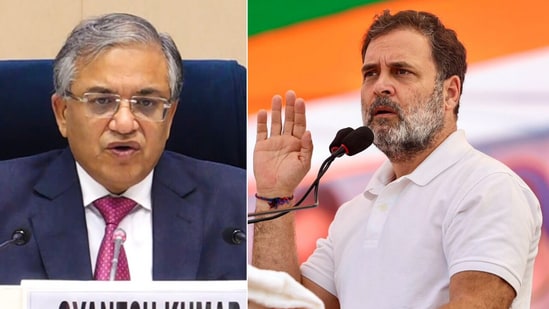

Calling for clarity from Election Commission, the Congress asked “how an additional three lakh electors were added” during the Bihar election process. The Election Commission has responded a day after the Congress alleged a discrepancy between two sets of voter data in Bihar, where it lost badly on Friday. In a Facebook post, the party said Chief Election Commissioner Gyanesh Kumar, in a press note on October 6, had put the total number of electors at 7.42 crore, while the Election Commission of India’s press release issued after the polling mentioned 7.45 crore.
Calling for clarity, the Congress said it needed to be explained “how an additional three lakh electors were added” during the election process. Responding to the charge, the Election Commission clarified on Saturday: “The figure of 7.42 crore electors mentioned on 6 October was based on the data available after the final publication of the electoral roll on 30 September.”
However, according to the poll body, the increase by 3 lakh occurred because election rules allow eligible citizens to apply for inclusion in the roll after elections are announced, too, up to 10 days before the last date of filing nominations in each phase of voting. It added that all valid applications received from October 1, until 10 days prior to the last date of nomination, were verified; and names of eligible voters were added “so that no qualified voter was deprived of the opportunity to vote”.
“This revised figure was mentioned by the Election Commission of India in its press release issued after polling,” it added, referring to the 7.45 crore. The Congress party’s fresh allegations on Election Commission came after its poor performance in the Bihar assembly election, results for which were declared on Friday. A Mahagathbandhan partner, Congress managed to win only six seats.
The National Democratic Alliance (NDA) registered a decisive victory, securing 202 of the 243 seats. The Bharatiya Janata Party emerged as the single-largest party, winning 89 of the 101 constituencies it contested, followed closely by its key ally, the Nitish Kumar-led Janata Dal (United), which bagged 85 seats.
Chirag Paswan’s Lok Janshakti Party (Ram Vilas) delivered a strong performance as well, clinching 19 of its 29 seats. Meanwhile, the Tejashwi Yadav-led Rashtriya Janata Dal suffered a steep decline, finishing with just 25 seats, a significant drop from the 75 it secured in the 2020 polls.
