

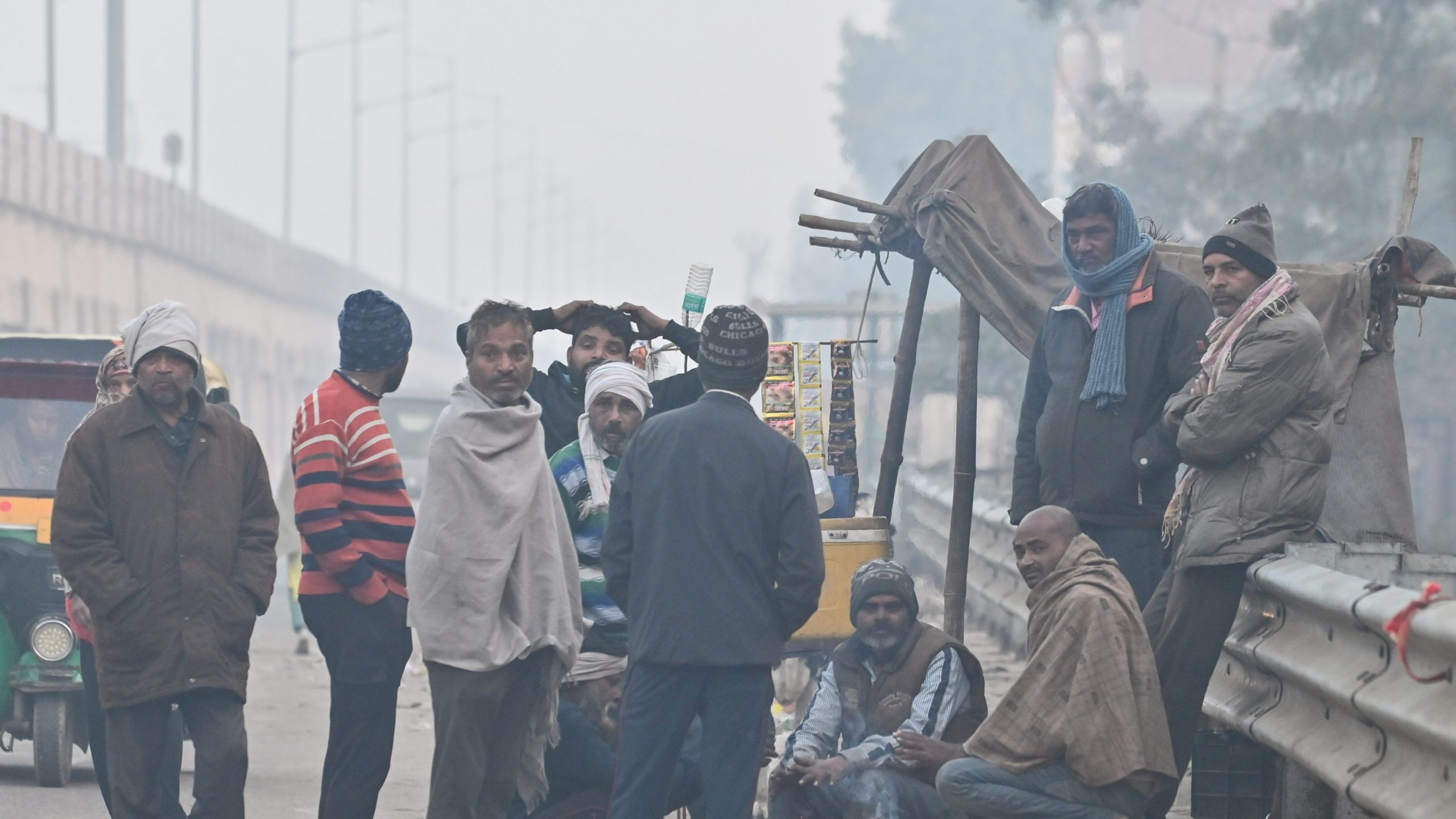

Temperatures in the plains, including in the national capital, have dipped below those in hilly areas such as Shimla. Several parts of northern India will continue to face freezing temperatures as the India Meteorological Department has issued a cold wave warning for the next couple of days in areas including Delhi and the National Capital Region, besides Haryana, Punjab, Rajasthan, Uttar Pradesh, and Uttarakhand and Himachal Pradesh, as per official information on Sunday.
In the bulletin issued on Sunday, January 11, the IMD said that cold wave to severe cold wave conditions are very likely at isolated places over Himachal Pradesh, Rajasthan, west Uttar Pradesh. Isolated places over Haryana, Chandigarh, Delhi, Punjab, Saurashtra and Kutch, and Uttarakhand may witness cold wave conditions on Monday, January 12. The cold wave streak is very likely to continue on Tuesday as well at isolated places over Himachal Pradesh, Jharkhand, Rajasthan, Uttarakhand and west Uttar Pradesh. For Jharkhand, the cold wave is likely to persist till Thursday, as per the IMD.
Surprisingly, the temperatures in plains, including Delhi and Chandigarh, have dipped below those in hilly cities such as Shimla. On Monday, the IMD forecast said that Shimla is likely to experience maximum and minimum temperatures of 16 and 9 degrees Celsius respectively. However, for Delhi, the weather department has predicted that the minimum temperature could dip to 3-4.2 degrees Celsius on Monday while the maximum temperature might hover between 18-20 degrees Celsius.
Himachal districts such as Shimla and Kullu have no warnings issued yet for the rest of the week, while Delhi is likely to witness cold wave conditions over the next two days and might see partly cloudy skies for the subsequent two days. While there is no major prediction of significant rain or snow for the next six days, several areas of Uttar Pradesh may witness dense fog on Monday. Dense Fog is also marked as very likely at places in Bihar, Haryana, Chandigarh, Delhi, Himachal Pradesh, Jammu and Kashmir, Ladakh, Punjab, Rajasthan, sub-Himalayan West Bengal, Sikkim and Uttarakhand on Monday, according to the IMD.
These areas are likely to be engulfed in dense fog till Thursday, January 15.
What could be the impact of cold wave conditions?
According to the IMD, cold wave and severe cold wave conditions could lead to several impacts on not just health but also agriculture, transport and other aspects of life. An increased likelihood of various illnesses like flu, running/stuffy nose or nosebleed, which usually set in or get aggravated due to prolonged exposure to cold. Do not ignore shivering. It is the first sign that the body is losing heat. Get indoors. Frostbite can occur due to prolonged exposure to cold. The skin turns pale, hard and numb and eventually black blisters appear on exposed body parts such as fingers, toes, nose and or earlobes. Severe frostbite needs immediate medical attention and treatment.
Impact on agriculture, crop, livestock, water supply, transport and power sector at some places. Amid the freezing temperatures, a new threat as emerged — the very commonly used space heaters — with several cases being reported from Delhi, Punjab, and Bihar, besides a number of deaths over the past month from Jammu and Kashmir, among other places.
In Delhi’s Mukundpur area, a family of three were killed in a fire last Tuesday. Police suspected a room heater exploded or caused a short circuit, knocking the family unconscious with smoke before the flames spread. In a similar tragedy, a young couple and their month-old infant died in Punjab’s Tarn Taran on Sunday of asphyxiation due to fumes after sleeping with a brazier in a room with all doors and windows closed, according to police.
