

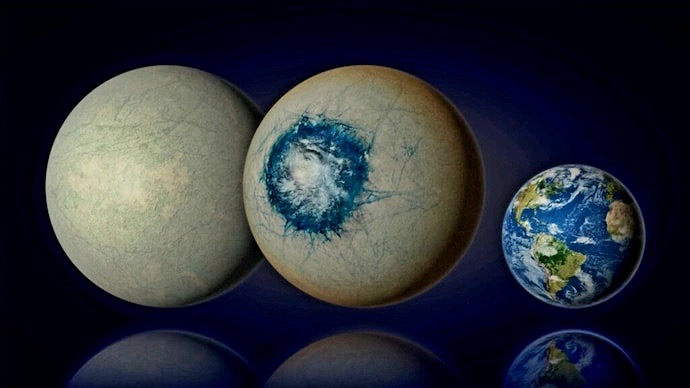

A group of scientists from around the world has made a groundbreaking discovery in the quest for potentially habitable exoplanets.Their research is set to be published in The Astrophysical Journal Letters. It indicates that LHS 1140 b is an exoplanet situated about 48 light-years away in the constellation Cetus. It might be a super-Earth covered in ice or water. What is Super earthThe results were spearheaded by Université de Montréal. It challenges previous beliefs about LHS 1140 b. Initially believed to be a mini-Neptune with a dense hydrogen-filled atmosphere, fresh information from the James Webb Space Telescope (JWST) suggests it is more likely a rocky or water-filled planet larger than Earth. The habitable zone of the red dwarf star may have liquid water on LHS 1140 b. Data from JWST and other telescopes suggest it has a nitrogen-rich atmosphere like Earth’s. Research shows that 10 to 20% of the planet’s mass could be water. Models indicate it might have a large ocean and a comfortable temperature at its center. More JWST observations are needed to confirm the atmosphere and search for other gases. Despite this, LHS 1140 b is a great candidate for future habitability studies. It is offering a chance to explore a potentially life-supporting world.
Trending
- Ex-India opener takes potshots at Riyan Parag’s appointment as Rajasthan Royals captain: ‘He’s treated like king’.
- ‘Restrain the Israelis first’: Joe Kent, who quit as Trump’s aide, on US President’s climbdown on Iran war.
- Psychiatrist shares ‘4 supplements that can naturally boost dopamine’.
- Trump reacts to ‘terrible’ LaGuardia airport crash as Canadian PM breaks silence: ‘They made a mistake’.
- What’s happening on US-Iran ‘talks’ as Trump makes big claim but Tehran denies.
- ‘Israel is fighting for you all’: Netanyahu urges global action as he visits missile strike site in Arad.
- Denied poll ticket, former Puducherry minister quits BJP.
- Air India cancels 2,500 flights to West Asia; CEO says airline operating at 30% capacity.
