

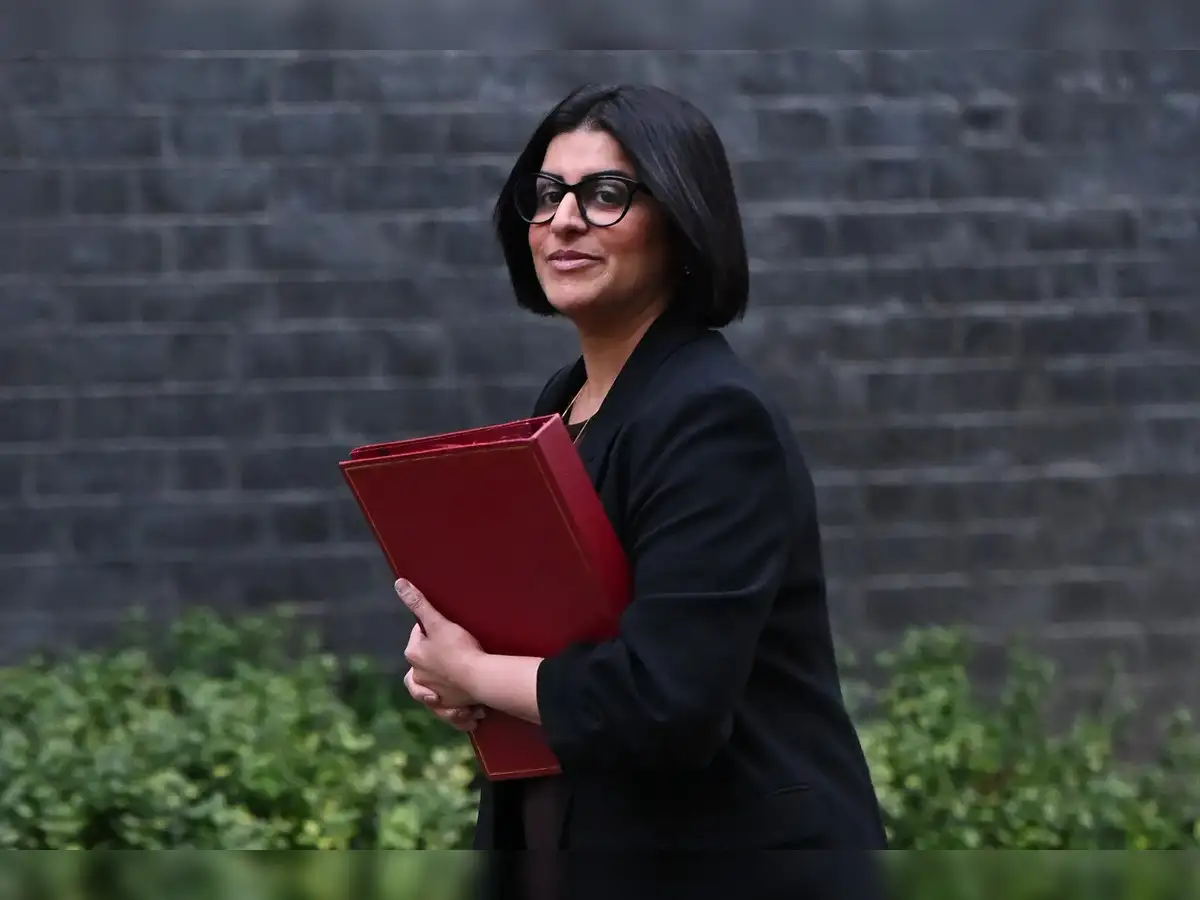

Shabana Mahmood, 45-year-old lawyer-politician, is recognised as an ambitious operator positioned on the rightwing side of Labour Party. As the premiership of UK’s Keir Starmer teeters on the brink of collapse, the Westminster rumour mill has turned its focus to a potential history-making successor: Shabana Mahmood. Currently serving as UK’s home secretary, Shabana Mahmood is increasingly viewed as a top-tier contender to lead the Labour Party, a move that would make her the United Kingdom’s first Muslim prime minister.
The turn of events has much to do with the Epstein files released in the US that have rocked governments across Europe and other parts of the world. Shabana Mahmood is a 45-year-old lawyer-politician, and a key ally of Keir Starmer. Within the party, she is recognised as a persuasive speaker and an ambitious operator positioned on the rightwing side of the Labour Party. She was born in Birmingham to Zubaida and Mahmood Ahmed, who have roots in Pakistan and in Pakistan-occupied Kashmir’s Mirpur town.
Since entering the Home Office in 2025, she has been tasked with the high-stakes mandate of managing the UK’s border security. She got her law degree from in 2002 from Lincoln College, Oxford; and completed the Bar Vocational Course at the Inns of Court School of Law the next year to become a barrister. In 2010, she became one of the first female Muslim MPs, along with Rushanara Ali and Yasmin Qureshi.
Position on migration
Shabana Mahmood’s identity and political positioning offer a unique dual appeal — even criticised as hypocritical, the BBC has reported. As a Muslim, she is seen as having the potential to reach out to pro-Palestine supporters and others who drifted away from the Labour Party in recent years as it unequivocally backed Israel’s military actions that global bodies dubbed as genocide. Her policy record is also hardline, particularly regarding immigration. As home secretary, she recently unveiled controversial plans to curtail the path to permanent residency in the UK — called Settlement or indefinite leave to remain — arguing that it’s a “privilege not a right”.
Premiership in turmoil for Starmer over Epstein files
The sudden focus on Mahmood and other leadership rivals follows a catastrophic week for PM Keir Starmer, whose future is currently in the balance following a crisis involving the appointment of Peter Mandelson as the UK’s ambassador to Washington. The revelation of Mandelson’s past ties to the convicted paedophile financier Jeffrey Epstein, who died in a New York jail in 2019, has sparked a firestorm within UK’s ruling party.
The crisis deepened when Starmer’s closest aide and Chief of Staff, Morgan McSweeney, resigned to take “full responsibility” for Mandelson’s appointment. This was meant to deflect direct responsibilty away from Starmer. However, many MPs believe the Prime Minister must “own the error” himself. With historically low approval ratings and a “weak and vulnerable” standing as per opinion polls, some aides suggest it is “50-50” whether Starmer will even last the week.
Who are frontrunners besides Shaban Mahmood?
While Shabana Mahmood is a significant contender, she faces competition from established Labour Party figures. According to analysts and bookmaker odds in the UK, the current landscape of frontrunners includes:
Angela Rayner, former deputy PM, is the current favourite. Despite her resignation in September over a tax investigation regarding a home purchase, she remains a “darling of Labour’s left”, and has been instrumental in forcing Starmer’s government to make u-turns on appointment of Epstein files-tainted Mandelson.
Wes Streeting is the health secretary, and considered a polished media performer with ambition. However, his close ties to a tainted Mandelson, and his defence of private sector involvement in the National Health Service (NHS). have hampered his support on the party’s left. Ed Miliband, energy secretary and former leader of the Labour, has seen his star rise a second time. He is popular with the “soft left”, but carries the baggage of the 2015 general election defeat for the party.
Andy Burnham, the Greater Manchester mayor, is popular but faces a significant hurdle: he does not hold a seat in Parliament, which is a requirement for the leadership under the party’s rules. Parliamentary rules allow someone without a seat to become PM, with some time given to win or be nominated to the House.
Mahmood’s rise to the top is built on a reputation for being tough and hardline, characteristics the party leadership believes are necessary to win over voters who might otherwise lean toward rightwing Nigel Farage’s Reform UK. Her most significant policy push involves doubling the time it takes for most migrant workers to qualify for permanent residence from five years to 10 years. She has defended these reforms, arguing that an “unprecedented” number of migrant arrivals in recent years demands a government response.
However, this stance has created friction within her own party.
Around 40 Labour MPs have voiced concerns, describing the retrospective nature of the changes as “un-British” and akin to “moving the goalposts”. Critics, such as MP Rachael Maskell, have warned that these reforms risk worsening the UK’s skills shortage, particularly in the healthcare sector. Beyond immigration, Mahmood has been active in broader security and policing. She recently rejected calls for Welsh police powers and defended the rollout of facial recognition technology to all police forces, despite concerns from civil liberties campaigners.
Currently bookies, legal in the UK, place Shabana Mahmood’s chances at “9/1”, which means a roughly 10% probability of success. But, her standing as someone who could bridge the gap between the party’s right wing and Muslim voters makes her a formidable darkhorse candidate
Her path to the premiership would require Starmer to resign or be forced out via a leadership challenge, which requires the nomination of at least 81 Labour MPs — 20% of the party’s members in the House of Commons. Whether Mahmood can capitalise on the current turmoil will likely depend on how her controversial immigration reforms land with the public, and whether she can maintain her image as a stabilising yet “tough” alternative to the current leadership.
