

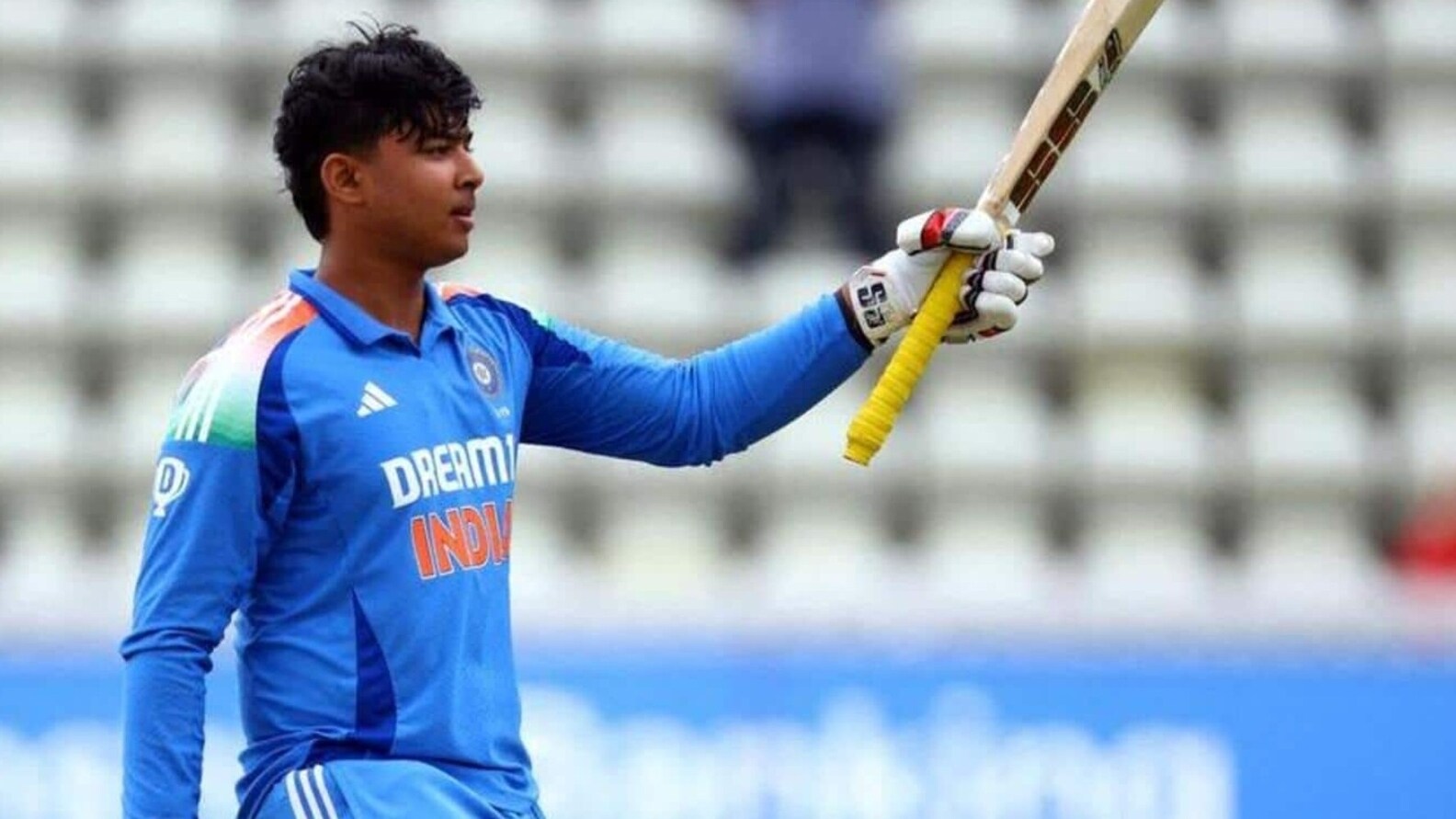

Vaibhav Sooryavanshi delivered a historic innings in the U19 World Cup final, scoring the second-fastest century and becoming the youngest centurion in a final. The thing about prodigies is that people treat them like a promise. Vaibhav Sooryavanshi treated a World Cup final like a deadline. His epic knock wasn’t just a pile of runs — it was a speed-run through the U19 record book, delivered under the kind of pressure that usually turns teenagers into timid adults.
Finals are supposed to tighten you up. The first few overs are meant to be about “seeing off” the shine, about not giving away your wicket to adrenaline. Vaibhav did the opposite: he made the final see him off. England’s plans lasted a couple of overs; then they began to look like guesses. Fields shifted, lengths changed, bowlers rotated — and none of it mattered, because the innings had a very simple message: if you miss, you disappear; if you hit the length, you still might disappear.
The hundred arrived like a headline in motion — fast enough to feel unreal, but clean enough to feel inevitable. And that’s where the innings flipped from “special” to “historic”.
Second-fastest century in U19 World Cup history
55-ball hundred vs England, Harare, 2026. Only one innings in U19 WC history has reached 100 quicker: Will Malajczuk’s 51-ball ton vs Japan (Windhoek, 2026).
Highest individual score in a U19 World Cup final
His final ton sits above the previous famous title-match hundreds: Unmukt Chand 111* (2012), Brett Williams 108 (1988), Stephen Peters 107 (1998), Manjot Kalra 101* (2018), Jarrad Burke 100* (2002).
Youngest centurion in a U19 World Cup final
The moment he got to three figures in a title clash, he became the youngest to do it in a U19 WC final.
First batter in U19 World Cup history to register four 50-plus scores at over run-a-ball
This is a tournament-wide landmark, but the final innings is part of what completed the feat — four 50+ scores, each at a strike rate north of 100.Those are not cute numbers. Those are the kind of lines that survive editions, formats, even eras. And what made it sting (for England) wasn’t just the violence of the hitting — it was how controlled it felt. This wasn’t slogging. This was a batter picking zones, sticking to them, and forcing the bowlers to live there with him.
The most telling part of the knock wasn’t even the hundred. It was what happened after it. Most young batters treat 100 as a destination — reach it, exhale, slow down. Vaibhav Sooryavanshi treated it like a runway. He accelerated into the back half of the innings with the calm of someone who wasn’t chasing a score, but chasing a statement.
In the end, the final didn’t become a story of two teams and a trophy. It became a story of one innings that yanked the match’s centre of gravity toward itself. And that’s the real difference between “a great knock” and “an innings people keep forwarding in WhatsApp groups years later.” Finals don’t hand you history. You take it. Vaibhav did — and left fingerprints all over the record list.
