
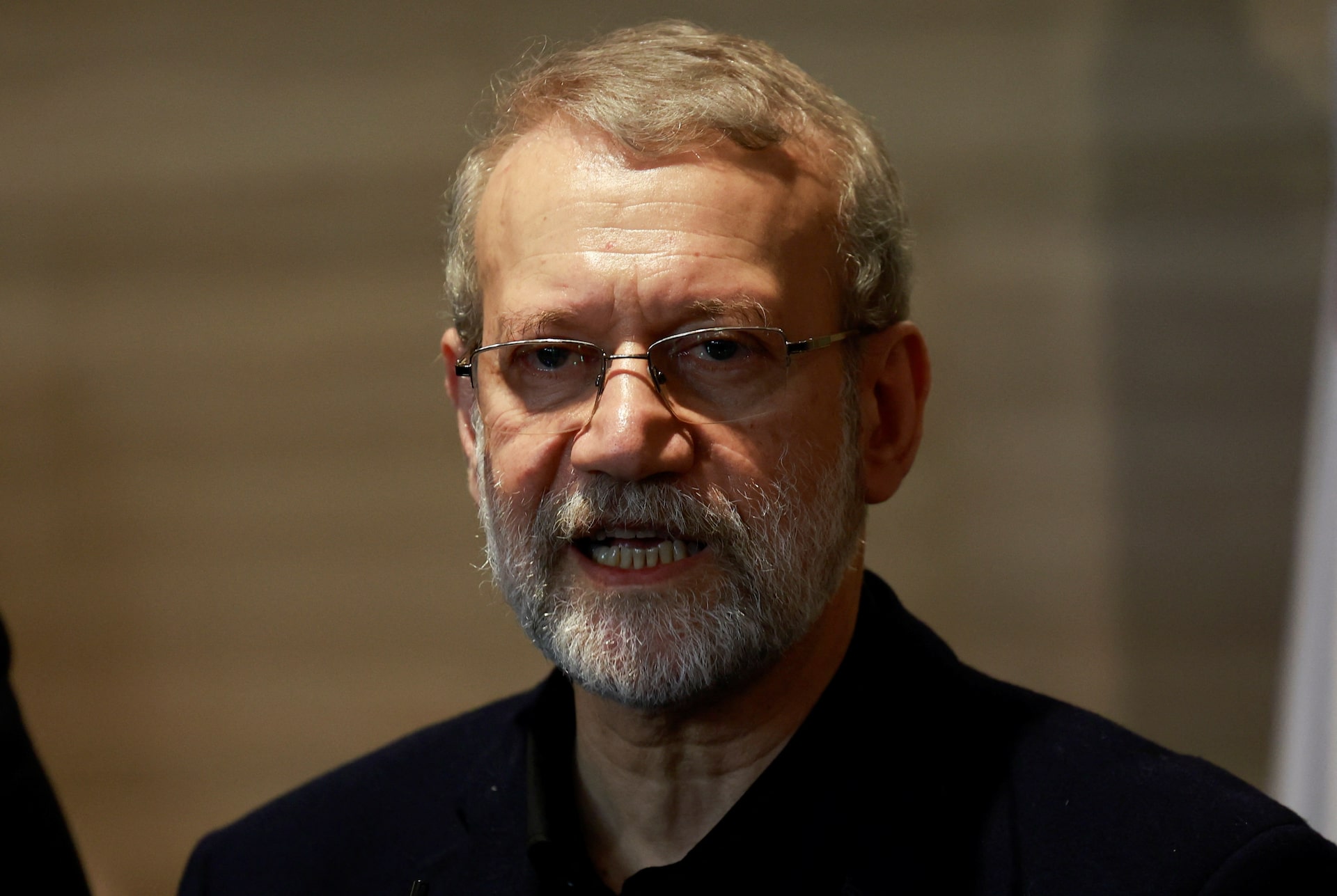

Larijani said last week that Iran won’t stop its attacks on US bases in Gulf countries, and that Trump should know the war “cannot be won with a few tweets”. Less than a week after Iran’s top security official Ali Larijani warned US President Donald Trump, that he would have to pay for the “grave miscalculation” of starting a war, Israeli officials and media claimed on Tuesday that Larijani had probably been killed the previous night.
But, just after this claim came out, there was an X post by Larijani in which he paid tributes to personnel of the Iranian navy. “Their memory will forever remain in the heart of the Iranian nation, and these martyrdoms will strengthen the foundation of the Islamic Republic’s military for years to come,” the post said, though it did not address the Israeli claims directly.
The Israeli Defence Forces (IDF) also made a “killed” claim about Gholamreza Soleimani, the commander of Iran’s Basij Unit, a paramilitary group under Iran’s elite Islamic Revolutionary Guard Corps (IRGC). There was no confirmation from the Iranian side on these claims at the time of publishing this report. Ali Larijani is widely considered Iran’s de facto leader; and he has family links to the clerical regime since his marriage into the family of a top religious leader before the 1979 Islamic Revolution, as per the think tank Arab Gulf States Institute based in Washington.
Larijani had said last week that Iran won’t stop its attacks on US bases in the Gulf countries until Trump says sorry. “Trump says he is looking for a speedy victory. While starting a war is easy, it cannot be won with a few tweets. We will not relent until making you sorry for this grave miscalculation,” Larijani wrote on X, a day after Trump claimed the war in Iran was “very much complete.”
The US-Israeli joint attack on Iran, which started on February 28, has widened into a regional conflict as Tehran targets US and Israeli bases across the Gulf, in countries such as the UAE, Qatar, Saudi Arabia, Bahrain, Kuwait and Oman, with drones and missiles. The conflict has also triggered an oil crisis with Iran taking control of the Strait of Hormuz, a narrow waterway through which 20% of the world’s oil and gas supply passes.
Ali Larijani is widely regarded as a key power broker in Tehran, described as Iran’s “de facto leader” — at least when Ayatollah Ali Khamenei was the Supreme Leader before being killed on February 28. At present, he is the secretary of the Supreme National Security Council. He was reported to have enough power to delay the formal declaration of Ali Khamenei’s son Mojtaba Khamenei as the next Supreme Leader.
Larijani had emerged from hiding last Friday during Iran’s Jerusalem (Quds) Day marches in Tehran, where he spoke alongside President Masoud Pazakhian and other senior officials. “Trump does not understand that the Iranian people are brave and strong, and he does not understand that our people are determined. The more the United States pressures us, the stronger our will becomes. The attacks by the United States and Israel against the Jerusalem Day marches demonstrate their desperation and helplessness,” Larijani said at that event.
For decades, Ali Larijani has been a calm and pragmatic face of the Iranian establishment. He was part of the negotiations for nuclear power-related talks with the US and the wider West. His academic works on the philosopher Immanuel Kant, in which he has a PhD from the University of Tehran. He has written three books in Persian language/Farsi on Kantian thought — one on the mathematical method in Kant’s philosophy, a second on metaphysics and the exact sciences, and a third on intuition, says his recent profile by the magazine Foreign Policy. His engagement with Kant is seen as an attempt to reconcile Western rationalism with Islamic thought, it added.
Born on June 3, 1958 in Najaf, Iraq, Larijani is a former speaker of Iran’s parliament. His family was described by Time magazine in 2009 as the “Kennedys of Iran”, with brothers holding senior positions in the judiciary and clerical councils.
